A garden walk and time for tea
Sit down and see Ritsurin Garden differently: a Takamatsu visit with time for tea
Planned publication: 5 November 2026 / Information checked: 3 November 2026
You have a little space in the day before your next destination. A famous garden could become a quick stop for a photograph, followed by another dash to the station. At Ritsurin Garden in Takamatsu, consider leaving enough time to sit down as well as walk.
The idea here is to look at Nanko, the South Pond, from different heights: beside the water, from the low floor of Kikugetsu-tei Teahouse, and, if the climb suits you, from Hirai-ho Hill. What sits in the foreground changes with your position. Allow around two hours inside the garden for this suggested visit; it is not a route around every pond and building.
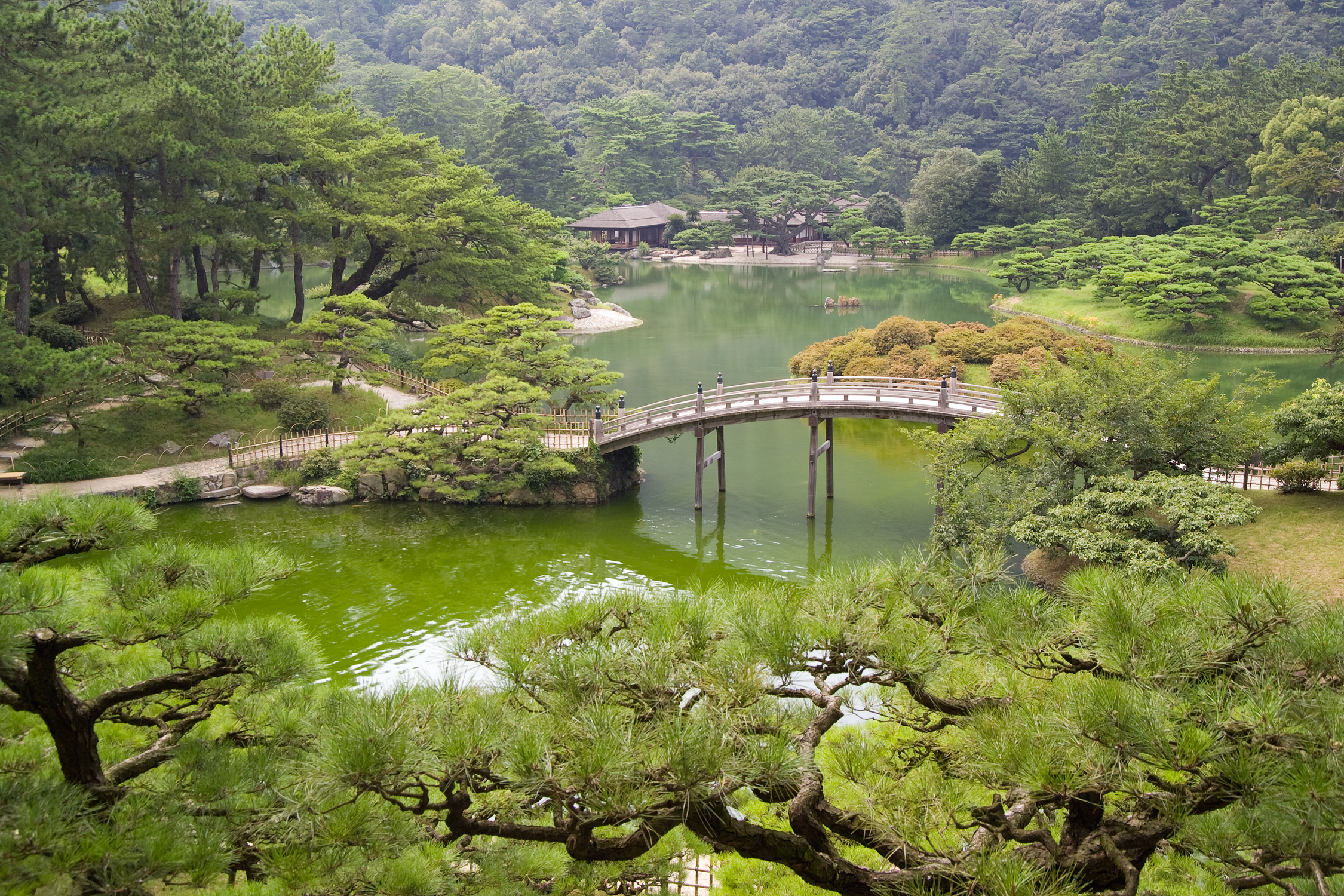
Start with the pines, then find the pond
Pick up a map at the East Gate and give yourself a few minutes around Tsurukame-matsu and Hako-matsu before heading straight for tea. Look at the direction of a branch, the curve of a trunk or a shadow on the ground. You do not need to learn all the names to find something worth stopping for.
The garden has six ponds and thirteen landscaped hills, with Mount Shiun behind them. A large map can make a visit feel like a checklist. This one concentrates on the South Pond and a manageable return to the East Gate. The sequence and time allowances below are editorial suggestions, not the schedule or duration of an official guided tour.
East Gate → the Tsurukame-matsu and Hako-matsu area → South Pond and Kikugetsu-tei → Hirai-ho if energy and footing allow → East Gate. Follow the official map and signs on the day, shortening the walk if paths are restricted.
As a planning example, set aside 30–40 minutes for the first walk, 30–40 for tea and a rest, and 30–40 for the return and photographs. That gives you roughly a two-hour window. Walking pace and queues can stretch it, so keep the journey back to the station and waiting for your train outside that allowance.
At Kikugetsu-tei, sit before reaching for the camera
Kikugetsu-tei is a large teahouse on the western side of the South Pond. Its low floor brings your eye closer to the water than it was while you were walking. Think of the separate teahouse admission as paying for a pause with tea and a view, and it becomes easier to decide whether it belongs in your day.
Imagine two people travelling together: one wants photographs, while the other wants a rest. Sitting down gives both a chance to share the view before moving on, with the pond close by and the mountain beyond it. If you take photographs, keep seats and passageways available so others can enjoy the view too.
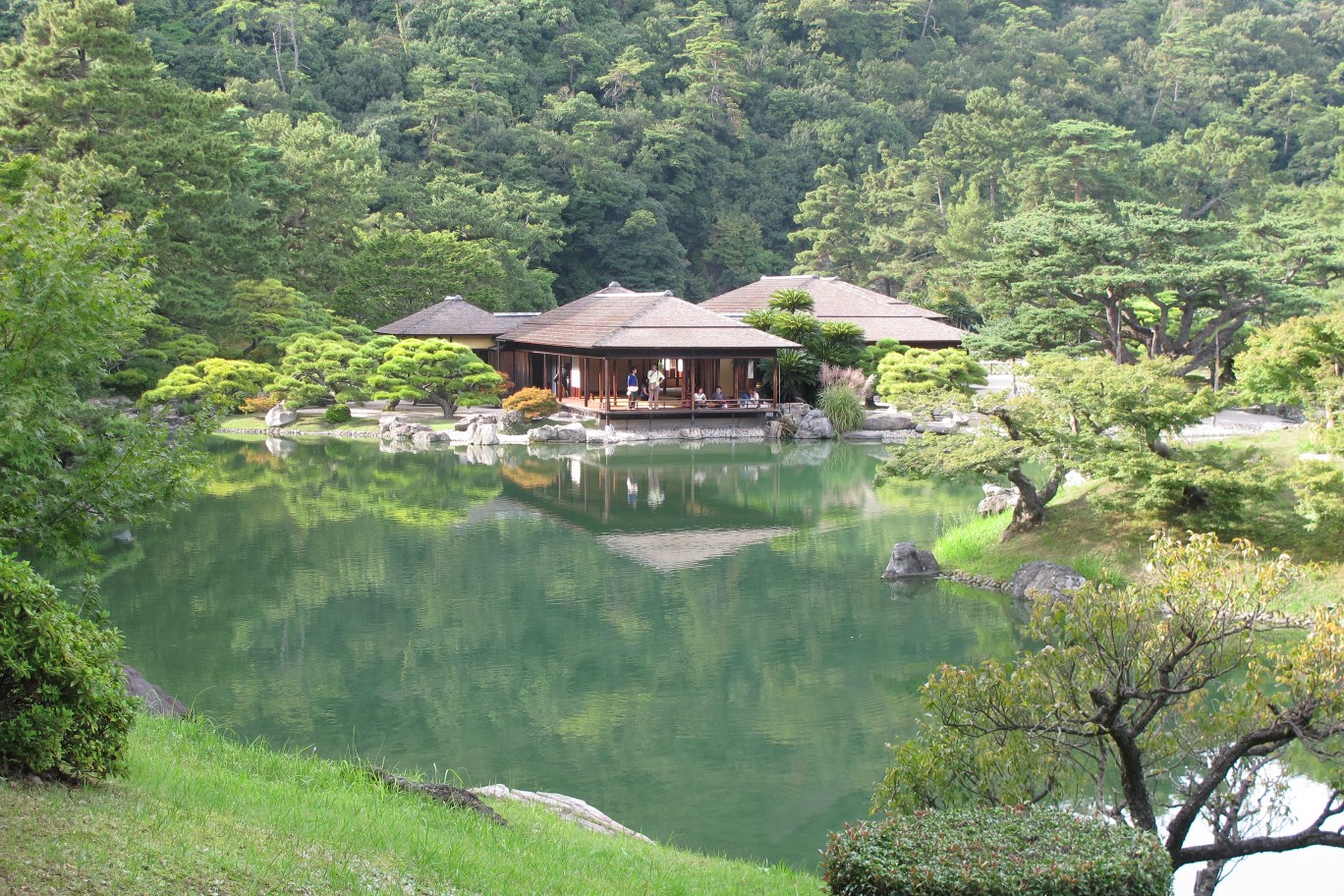
The operator, Nicho, lists Kikugetsu-tei hours as 09:00–16:30, with last admission at 16:00. Admission with matcha and sweets is ¥800 for adults or ¥500 for elementary and junior-high pupils. Sencha and sweets cost ¥600 or ¥400 respectively. Garden admission is separate. Check the operator's current information before setting off, as arrangements and availability may change.
The garden opens earlier than the teahouse. If tea is the main reason for this visit, do not build the whole plan around arriving at the garden's opening time: the teahouse starts at 09:00. The operator also offers reserved lunch arrangements, which are separate from an ordinary tea visit and excluded from this budget. No particular seat or availability is guaranteed here.
Leave the higher viewpoint as an optional finish
Hirai-ho is a landscaped hill overlooking the South Pond, Engetsukyo Bridge and Kikugetsu-tei, with Mount Shiun in the background. After seeing the pond at ground level, you can look for the places you have just walked past. The view becomes a way to understand the garden's layout rather than simply another photograph to collect.
The climb is optional. If the ground is wet or you want less walking, turning back beside the pond still makes a worthwhile visit. Some paths are difficult for wheelchairs and pushchairs; consult the official accessible route map first. There is no need to reach the exact spot shown in a photograph.
What should you budget for admission and tea?
| Item | Adult | Elementary / junior-high pupil |
|---|---|---|
| Garden admission | ¥500 | ¥170 |
| Kikugetsu-tei: matcha and sweets | ¥800 | ¥500 |
| Kikugetsu-tei: sencha and sweets | ¥600 | ¥400 |
For one adult, garden admission plus sencha totals ¥1,100, or ¥1,300 with matcha. In a hypothetical visit by two adults both choosing matcha, the total is ¥2,600. An elementary or junior-high pupil's garden admission and matcha total ¥670. Preschool children enter the garden free, but the teahouse's published child category is elementary and junior-high pupils: do not assume the garden's preschool exemption also makes tea free.
If you allow an additional ¥800–1,200 for lunch elsewhere, the garden, tea and lunch together come to roughly ¥1,900–2,500 per adult. The lunch allowance is an editorial estimate, not a quoted menu price. Rail, bus or taxi fares, accommodation and shopping are extra. These totals use standard prices without discounts or admission exemptions.
November closes early, and the station names matter
The official visitor guide lists November opening hours as 06:30–17:00, normally every day. A storm warning, including a blizzard warning, for the Takamatsu area triggers temporary closure. This article does not promise autumn colour or any evening illumination programme. Plan this as a daytime visit and check current notices and the opening hours for your actual month.
For a visit without a car, choose your entrance before choosing a station. The official Japanese access page gives approximate walks of seven minutes from Kotoden Ritsurin Koen Station, three minutes from JR Ritsurin Koen Kitaguchi Station, and fifteen minutes from JR Ritsurin Station. These are different stations despite their similar names. Starting at the East Gate, as suggested here, is different from entering at the North Gate and walking across toward the east side.
A bus is another option from Takamatsu Station. The official garden page directs visitors to stops 4 and 5 for services to Ritsurin Koen-mae. Check the transport operator for the fare and timetable of your chosen service. The published walking times are guides; add room for crossings, luggage and finding your way.
If it rains, make the walk smaller
For a visit in light rain, one option is a shorter walk with a break at Kikugetsu-tei. Another is the Sanuki Folk Craft Museum, where admission itself is free once you have paid to enter the garden. The official guide lists the same hours as the garden and no regular closed days. You can turn part of the visit toward local crafts and everyday objects instead of trying to cover every path.
Reaching either building still involves walking outside. This is not an entirely indoor wet-weather itinerary. In heavy rain or strong wind, postponing may be the better choice; check the forecast and garden notices. The sky and reflections may not resemble the archive photographs, but you can keep control of how much walking the day asks of you.
Official information checked before departure
Prices, hours, access and conditions were checked against the following official sources on 3 November 2026. The walking sequence and time allowances are planning suggestions; the lunch allowance is a budget estimate.
- Official garden guide: admission, hours, temporary closure rules and maps
- Official access guide: stations and bus stops
- Official viewing guide: Hirai-ho, Kikugetsu-tei and the folk craft museum
- Teahouse operator Nicho: opening hours, tea prices and arrangements
- Fee changes effective June 2025
- Official garden map (PDF)