Yokohama by the water: from Zou-no-hana to Osanbashi and Yamashita Park
An elephant’s trunk and a whale’s back beside the harbour: let Yokohama’s curious place names lead the way. Walk from Nihon-odori through Zou-no-hana, Osanbashi and Yamashita Park, with lunch and a break before finishing at Motomachi-Chukagai.
This route is planned from official information rather than a visit made for this article. Treat the timings and food budget as planning allowances; facility conditions are listed separately with their checking date.
About four hours from Nihon-odori to Motomachi-Chukagai
Start at Nihon-odori Station and walk to Zou-no-hana Park. Make an out-and-back visit onto Osanbashi, return to land, then continue to Yamashita Park. Finish with lunch and a drink break before leaving from Motomachi-Chukagai Station. Osanbashi is a pier: you cannot walk straight off its seaward end into Yamashita Park. Allow time to return towards the entrance.
This proposal runs roughly 10:00–14:00, on foot. Keep the focus on three harbour-side places rather than adding the Red Brick Warehouse, a Ferris wheel or Yamate’s hills. Allow ¥1,800–3,200 per adult locally, excluding travel to and from the area, paid attractions, boat trips and shopping. Walking speed and detours vary; this is not a distance challenge.
| Time | Plan and movement |
|---|---|
| 10:00–10:15 | Walk from Nihon-odori Station to Zou-no-hana Park. The Terrace’s official access guide gives about three minutes from Exit 1; allow 15 for finding your exit and crossings. |
| 10:15–10:40 | A short park walk: look towards the breakwater or pause in the plaza. Use open paths around any event activity. |
| 10:40–11:25 | Walk to Osanbashi and make an out-and-back rooftop visit, including the return towards the entrance. Omit it if winds or restrictions make it unsuitable. |
| 11:25–12:10 | Return towards land and continue to Yamashita Park, allowing for crossings, pauses and a short waterside stroll. |
| 12:10–13:10 | Lunch around Yamashitacho or towards the station. Keep another restaurant in mind if queues are long. |
| 13:10–14:00 | A drink break and the walk to Motomachi-Chukagai Station. The official park access is three minutes from Exit 4, but allow more from wherever you are within the park. |
Elephant’s Trunk: a name from a breakwater
Zou-no-hana Terrace’s official history explains that the name comes from the breakwater’s resemblance to an elephant’s trunk. The present shape reconstructs the breakwater of the middle Meiji period. Rather than looking for an animal, look at the line where land meets water.
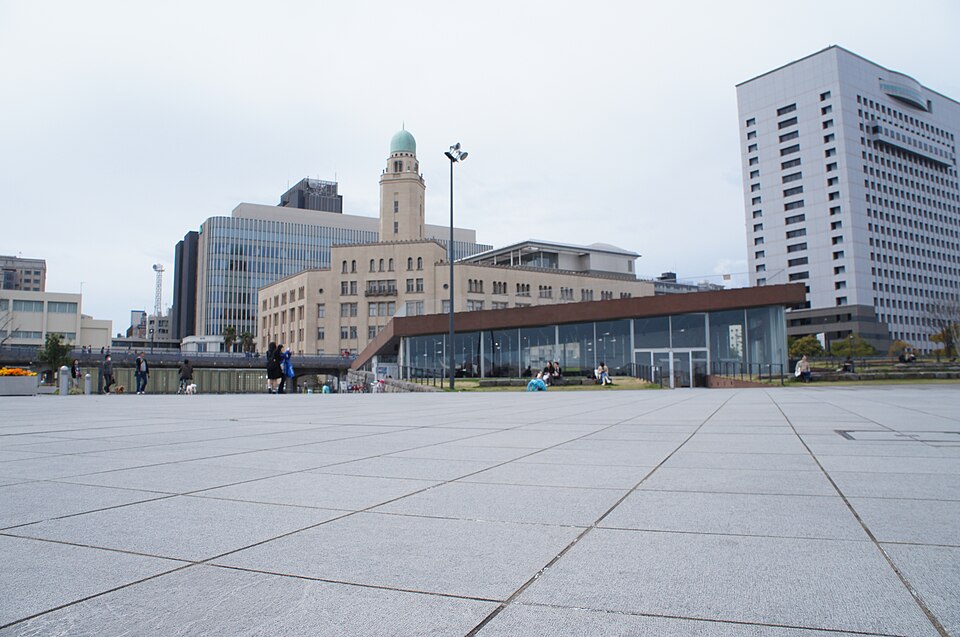
Consider turning back towards the buildings as well as looking out to sea. The first photograph shows that city-facing view in 2015. It does not promise the same empty space today. If an event or crowds occupy the area, follow the pedestrian flow instead of trying to reproduce the photograph.
Osanbashi: rooftop hours and indoor hours differ
The rooftop plaza, known as Kujira no Senaka or “Whale’s Back”, is listed in the official floor guide as open 24 hours for general visitors to stroll freely. The second floor is open 9:00–21:30. Shops and restaurants have their own conditions: a 24-hour rooftop does not mean an indoor shop will be open whenever you visit.
This itinerary stays in generally accessible areas and does not include boarding a ship. No particular ship arrival or departure is promised. Take the rooftop’s slopes and changes of level slowly; turn back if the wind or wet surfaces make the walk uncomfortable. Follow on-site restrictions and signs, including those about access to the lawn.
The official direct walk from Nihon-odori Station’s Exit 3 or 4 is seven minutes. Our route visits Zou-no-hana first, so that figure is not the walking time for the whole itinerary. The facility descriptions consulted do not require advance reservations for an ordinary public stroll. Events, venue hire and organised filming have separate conditions; this is not a commercial filming plan.
Yamashita Park: leave room for a pause
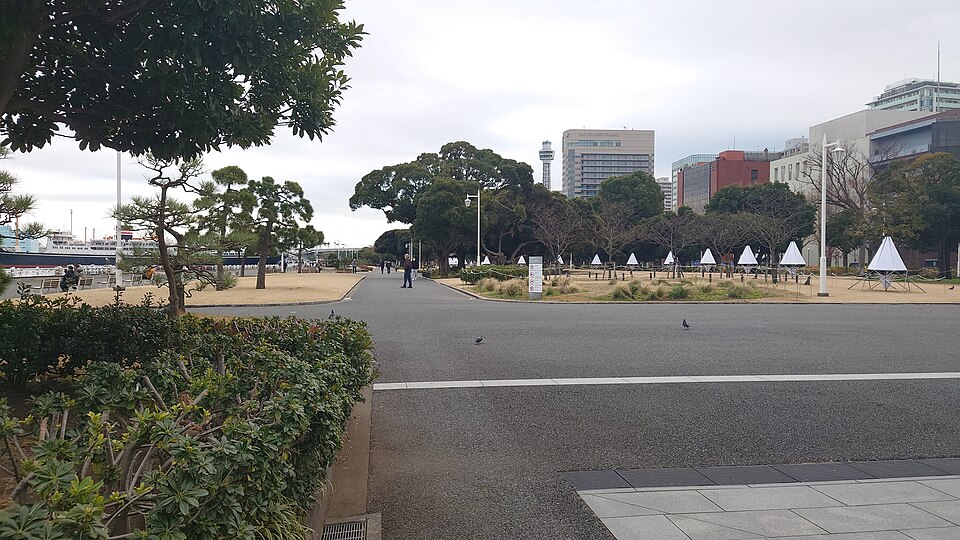
Yokohama City describes Yamashita Park as a project of recovery from the Great Kanto Earthquake; it opened in March 1930. Knowing that this place for looking at the sea also forms part of the city’s recovery story gives the walk another layer.
Look at the water or flower beds, then rest if a seat is available. Flowers, a vacant bench or a particular ship are not guaranteed. Entering ships or observation facilities nearby is outside the basic plan. If you add one, check its official charges, closures and reservation conditions separately and revise lunch and return timings.
Allow ¥1,800–3,200 locally, then add your transport
| Item | Allowance | Basis and limits |
|---|---|---|
| Public walking areas | ¥0 | Ordinary paths at Zou-no-hana and Yamashita parks and Osanbashi’s public rooftop; paid events, exhibitions, boat trips and private hire excluded. |
| Lunch | ¥1,200–2,000 | Editorial estimate, not a restaurant quotation. |
| Drink / break | ¥500–900 | Estimate; check opening, seating and ordering conditions individually. |
| Contingency | ¥100–300 | An allowance for extra drinks and similar costs. |
| Total | ¥1,800–3,200 | Travel to/from the area, boats, paid attractions and shopping excluded. |
Budget for arriving at Nihon-odori and returning from Motomachi-Chukagai according to your starting point. This plan does not involve repeated local train rides and does not assume a day pass saves money. If switching to a bus or taxi, check the extra cost and boarding place separately.
Rain or wind: omit the sections projecting into the harbour
In light rain, shorten the Zou-no-hana walk, take a break at the Terrace if open, eat nearby and return to Nihon-odori Station. Its official guide lists 10:00–18:00, free entry and daily opening, subject to changes. Café purchases and individual events have separate conditions, and seats are not guaranteed.
Omit Osanbashi’s rooftop and the longer Yamashita walk. This is not an entirely sheltered route. In heavy rain, strong winds, service disruption or access restrictions, reconsider the outing, including postponement. The article does not guarantee access or opening on 30 October; check the notices for the day you actually travel.
Before leaving
- Osanbashi’s notices and floor guide: rooftop and second-floor hours, restrictions and events.
- Any changes at Zou-no-hana Terrace, the city’s park guidance, and weather and harbour-side wind.
- The railway operator’s service updates, station layouts and fares for both ends of your trip.
- Your chosen restaurant or café’s days, hours, booking and ordering rules. Wear suitable shoes and keep luggage easy to carry.
Official sources and photo credits
Information checked . Prices, hours and conditions may change.
- Zou-no-hana Terrace: history and name / access and hours
- Osanbashi: floor guide / rooftop plaza / access / latest notices
- Yokohama City: Yamashita Park / Minato Mirai 21 official guide: Zou-no-hana Park
- Minatomirai Line: area and station information
Sources are principally Japanese. Each real photograph credits its author, date and licence. These are archive images, not records of a visit made for this article or guarantees of today’s view.
Read this article in JapaneseJapan travel plans →